Paying Out of Pocket for Medicine That Works: The Medical Cannabis Insurance Nightmare and How to Fight Back
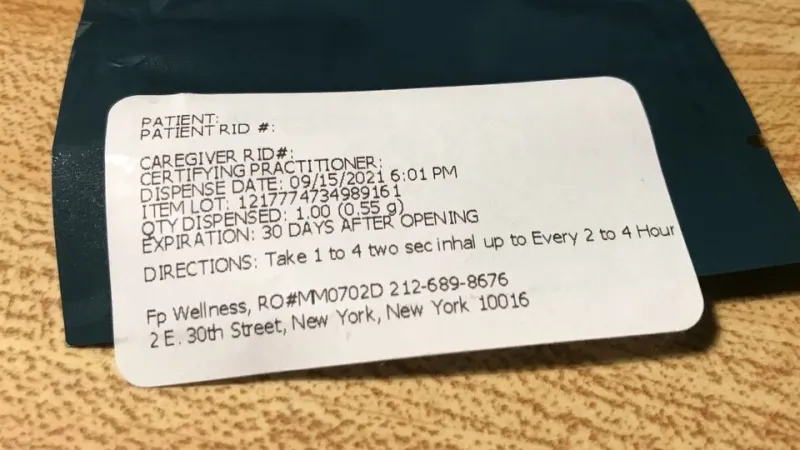
Photo: Spaceboyjosh, CC BY-SA 4.0, via Wikimedia Commons
Let's be honest — if you're a medical cannabis patient in America right now, you already know the frustration. You've got a doctor's recommendation, a valid medical card, and a dispensary you trust. What you don't have? An insurance company willing to help you pay for any of it. In 2024, despite record-breaking legalization momentum across the country, health insurers remain almost universally opposed to covering medical cannabis. And patients are the ones footing the bill.
But here's the thing: understanding the landscape — the why, the workarounds, and the ways to advocate for yourself — can make a real difference. So let's break it all down.
Why Insurance Won't Touch It (Yet)
The root of the problem comes down to one stubborn reality: cannabis is still classified as a Schedule I controlled substance under federal law. That single designation creates a legal firewall between medical cannabis and the insurance industry. Because most major insurers operate under federal regulatory frameworks — including Medicare and Medicaid — they simply cannot reimburse for a substance that Washington still considers to have "no accepted medical use."
Even as more than 38 states have enacted medical cannabis programs, the federal-state disconnect keeps insurers locked in place. Private insurers follow suit, largely because covering cannabis would expose them to federal liability risks they have zero appetite for.
The result? Patients spend an average of $50 to $150 per month — and in some cases, significantly more — entirely out of pocket. For people managing serious conditions like multiple sclerosis, cancer-related pain, or treatment-resistant epilepsy, those costs can spike into the hundreds.
Real Patients, Real Costs
Take Sandra, a 54-year-old nurse from Arizona who started using medical cannabis three years ago after a spinal cord injury left her with debilitating nerve pain. "I tried everything — opioids, nerve blockers, physical therapy," she says. "Cannabis was the first thing that actually let me sleep through the night. But my insurance covers none of it. I spend about $200 a month at the dispensary, and that's coming straight out of my Social Security disability check."
Or consider Marcus, a 29-year-old veteran in Colorado who uses cannabis to manage PTSD after two tours overseas. "The VA covers therapy and medication, but not cannabis. I've had doctors informally tell me it's helping me more than the antidepressants did. But officially? I'm on my own."
These stories aren't outliers. They're the norm for the estimated 3.6 million registered medical cannabis patients across the US.
What You CAN Do Right Now
While the insurance industry catches up to reality (slowly, painfully slowly), there are real strategies you can use today to reduce your costs and build a paper trail that may matter later.
Document Everything — Seriously, Everything
Start treating your cannabis use like any other medical treatment. Keep records of your diagnosis, your doctor's recommendation, any prior treatments you tried that failed, and the specific relief cannabis provides. This documentation matters for two reasons: it strengthens any future insurance appeals, and it builds the kind of evidence base that advocacy groups need to push for policy change.
Ask your physician to write a detailed letter of medical necessity. This won't magically get you reimbursed today, but it creates a formal record that you're using cannabis therapeutically, not recreationally — a distinction that will become increasingly important as coverage conversations evolve.
Explore HSA and FSA Gray Areas
Here's a nuance most people miss: while you cannot use a Health Savings Account (HSA) or Flexible Spending Account (FSA) to purchase cannabis directly, you may be able to use those funds for related expenses — like doctor's visits to renew your medical card, or qualifying medical devices used alongside your treatment. Talk to a tax professional about what's permissible in your specific situation.
Look Into State-Level Assistance Programs
Some states have started addressing affordability on their own. New Jersey, for example, has a compassionate care program that offers reduced-cost cannabis to low-income patients. Illinois has similar provisions. Check your state's medical cannabis program website for any financial assistance options — they're often underadvertised but genuinely helpful.
Dispensary Loyalty Programs and Patient Discounts
Don't sleep on the dispensary level either. Many licensed dispensaries offer veteran discounts, low-income pricing tiers, and loyalty rewards programs that can meaningfully cut your monthly spend. Ask your dispensary directly — most are happy to connect qualifying patients with available savings.
Advocating for Change: Your Voice Actually Matters
The insurance coverage conversation is starting to shift, and patient advocates are driving it. Organizations like Americans for Safe Access (ASA) and the Marijuana Policy Project are actively lobbying for federal rescheduling — which would be the single biggest unlock for insurance coverage. The Biden administration's move to propose rescheduling cannabis to Schedule III in 2024 is a step in the right direction, though it still falls short of the full reclassification that would open the insurance door wide.
You can add your voice by contacting your congressional representatives, participating in public comment periods during rulemaking processes, and sharing your patient story with advocacy organizations. Personal narratives from real patients are among the most powerful tools in this fight.
What Rescheduling Could Actually Mean
If cannabis is moved to Schedule III, it wouldn't automatically trigger insurance coverage — but it would remove the federal legal barrier that currently makes coverage impossible. From there, the FDA would need to approve cannabis-based medicines through its standard process, and insurers would face increasing pressure to develop coverage policies. It's a long road, but the direction is finally right.
In the meantime, some pharmaceutical-grade cannabis-derived medications — like Epidiolex, an FDA-approved CBD treatment for certain types of epilepsy — are already covered by insurance. If your condition overlaps with an approved indication, it's worth talking to your doctor about whether a pharmaceutical option might be appropriate and coverable.
The Bottom Line
Medical cannabis patients in America are being asked to pay twice: once with their health, and again with their wallets. That's not acceptable. The medicine works. The doctors know it. The patients definitely know it. Now it's time for the insurance industry — and the federal government — to catch up.
Until they do, document your treatment, explore every discount and assistance program available, and keep making noise. The fight to free the weed isn't just about recreational access — it's about making sure that the patients who need it most aren't priced out of their own healthcare.