Label Literacy: What the Words on Your Weed Actually Mean (And What They're Hiding)
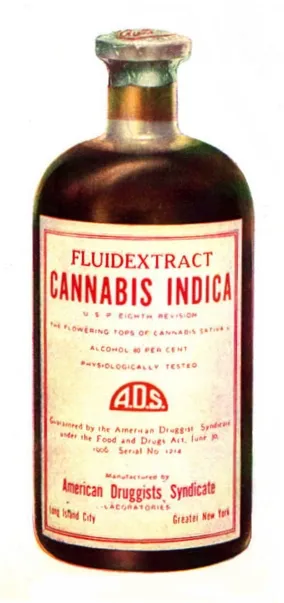
Photo: Unknown, Public domain, via Wikimedia Commons
You walk into a dispensary. The cases are gleaming. The budtender is friendly. And the menu is absolutely overwhelming.
Blue Dream. 24% THC. Hybrid. Myrcene-dominant. CO2 extracted. Full-spectrum. Live resin.
What does any of that actually mean? More importantly — will it do what you want it to do?
The cannabis industry has a terminology problem. Labels have gotten more detailed over the years, which sounds like progress, but more information isn't the same as better information. A lot of what ends up on product packaging is either genuinely useful science or sophisticated marketing dressed up to look like science. Knowing the difference is the whole game.
Let's break it down.
THC and CBD: The Numbers You're Probably Staring At
These are the two cannabinoids that dominate product labels, and for good reason — they're the most studied and the most abundant in most commercial cannabis.
THC (tetrahydrocannabinol) is the compound responsible for the psychoactive effects most people associate with getting high. It's listed as a percentage of the total product weight. A flower product at 20% THC means that roughly 20% of that bud's dry weight is THC.
Here's the catch: THC percentage is not a reliable predictor of how intense your experience will be. The research on this is pretty clear. Factors like your personal tolerance, your consumption method, how recently you've eaten, and the presence of other compounds all play significant roles. Someone with a high tolerance might feel almost nothing from a 25% THC product. A cannabis newcomer might be on the floor.
Chasing the highest THC number is one of the most common — and most misleading — purchasing habits in legal cannabis. Don't fall for it.
CBD (cannabidiol) is non-intoxicating and has been associated with anti-anxiety, anti-inflammatory, and pain-modulating effects. Products with meaningful CBD content (think a 1:1 or 2:1 THC:CBD ratio) often produce a softer, more body-focused experience than high-THC-only products. For medical consumers especially, CBD content can be just as important as THC.
Sativa, Indica, Hybrid: Useful Shorthand or Total Fiction?
Walk into any dispensary and you'll see products sorted into these three buckets. The conventional wisdom goes something like this: sativas are energizing and cerebral, indicas are sedating and body-heavy, and hybrids are somewhere in between.
Here's the uncomfortable truth: botanically speaking, this framework is largely meaningless at this point. The terms sativa and indica originally described physical plant characteristics — growth patterns, leaf shape, geographic origin. They were never meant to predict effects. And after decades of crossbreeding, almost every commercially available cannabis strain is technically a hybrid anyway.
So why does the sativa/indica distinction persist? Partly because it's useful shorthand that consumers understand. Partly because the industry has built marketing around it. And partly because the effects people report do sometimes align with these categories — even if the underlying reason is more about terpene profiles and individual biochemistry than plant taxonomy.
Bottom line: use sativa/indica as a starting point, not a guarantee. Pay more attention to terpenes if you want something closer to a real prediction.
Terpenes: The Part of the Label Worth Reading Carefully
Terpenes are aromatic compounds found in cannabis — and in thousands of other plants. They're what give a strain its distinctive smell and flavor. But they do more than just make your weed smell like lemons or pine needles. They interact with cannabinoids in ways that meaningfully shape your experience.
This interaction is sometimes called the entourage effect — the idea that cannabinoids and terpenes work together synergistically, producing effects that neither compound would create on its own.
Some terpenes to know:
- Myrcene — Earthy, musky, herbal. Associated with sedation and muscle relaxation. Very common in indica-leaning strains.
- Limonene — Citrusy. Often linked to mood elevation and stress relief.
- Pinene — Smells like a forest. May support alertness and memory retention — which can actually counteract some of THC's short-term memory effects.
- Linalool — Floral, lavender-adjacent. Associated with calming and anti-anxiety effects.
- Caryophyllene — Spicy, peppery. Unique in that it also interacts with the body's CB2 receptors, similar to cannabinoids. Often discussed in the context of pain and inflammation.
If a dispensary's product labels include terpene information, use it. If they don't, ask. A good budtender should be able to tell you what's dominant in a given product.
Why the Same Strain Can Hit Completely Differently
You've probably experienced this: you loved a particular strain last month, bought it again, and it felt totally different. That's not in your head.
Cannabis is an agricultural product. Growing conditions — light spectrum, soil composition, humidity, temperature, harvest timing, curing methods — all affect the final chemical profile of the plant. Two batches of Blue Dream from two different cultivators (or even two different harvests from the same cultivator) can have meaningfully different terpene profiles and cannabinoid concentrations.
This is one reason why strain names alone are such an unreliable guide. The name tells you about lineage. It doesn't tell you about the specific chemical makeup of the product in that jar on that day.
When you find something that works for you, note the cultivator, the batch, and the terpene profile — not just the strain name.
Decoding Product Types: Flower, Concentrates, Edibles, and More
The product landscape has expanded dramatically, and the terminology can get dense fast.
Live resin and live rosin are concentrate products made from fresh-frozen cannabis rather than dried and cured plant material. The goal is to preserve a fuller terpene profile. These tend to be more expensive but often deliver a more flavorful, nuanced experience.
Distillate is a highly refined extract that's been stripped down to near-pure THC or CBD. It's odorless and tasteless on its own, which is why it's commonly used in vape cartridges and edibles. It's potent, but the refining process removes most terpenes — so you're getting cannabinoids without the entourage effect unless terpenes are added back in.
Full-spectrum products retain a broader range of cannabinoids and terpenes from the original plant. Broad-spectrum is similar but with THC removed or reduced. Isolate means a single compound — usually CBD — in its purest form.
For edibles, onset time and duration are the most important variables to understand. Digestion-based absorption is slower (anywhere from 30 minutes to two hours) and longer-lasting than inhaled cannabis. This is where most overconsumption incidents happen — people don't feel it, take more, and then feel way too much. Start low, go slow. That's not just a slogan.
Be a Smarter Consumer
The cannabis industry is still young, and labeling standards vary significantly from state to state. Some states require comprehensive testing and transparent labeling. Others have minimal requirements. Until federal standardization catches up, it's on consumers to educate themselves.
Ask questions at the dispensary. Push for terpene data. Don't buy based on THC percentage alone. Keep notes on what works. And treat every new product as a variable to test, not a guarantee.
Knowing what you're buying isn't just about getting a better high — it's about being an informed consumer in an industry that's still figuring itself out. Free the weed, sure. But first, understand it.