Green Light at Home, Red Flag at Work: The Hiring Paradox Crushing Cannabis Consumers

Imagine this: you live in Colorado, Illinois, or California. Cannabis is fully legal where you are. You pick up a legal eighth from a licensed dispensary on a Friday, enjoy your weekend like a responsible adult, and Monday morning you show up to a job interview feeling sharp and ready. Two weeks later, you get a call — not with an offer, but with a quiet rejection. The background screening flagged a past cannabis charge. Or worse, the pre-employment drug test came back positive even though you haven't used in weeks.
Legal state. Legal purchase. Legal use. Zero job.
This is the hiring paradox that's quietly grinding down the lives of millions of cannabis consumers across the country, and it's one of the most infuriating contradictions of the modern legalization era. We've won the culture war in half the states. We haven't even started winning the employment war.
The Federal Fault Line Nobody Warned You About
Here's the core problem, and it doesn't get simpler the longer you look at it: cannabis is still a Schedule I controlled substance under federal law. That single fact gives employers — especially those with federal contracts, security clearances, or interstate operations — a blanket excuse to screen out cannabis users regardless of what any state legislature has decided.
Federal contractors are legally required to maintain drug-free workplace policies under the Drug-Free Workplace Act of 1988. That means defense contractors, healthcare networks that receive Medicare or Medicaid funding, transportation companies regulated by the DOT, and a massive swath of the American economy can and do test for cannabis — and they fire or reject applicants who fail, full stop.
But it doesn't stop there. Even private employers with zero federal ties have largely kept their drug testing policies frozen in the 1990s. Old habits, old liability fears, and old HR software don't update themselves just because a state passed a ballot measure.
The Resume Problem Is Real — And It's Personal
Talk to people who've been burned by this and the stories get real fast.
Take Marcus, a software developer in Michigan who had a minor cannabis possession charge from 2017 expunged under the state's new clean slate law. He applied for a senior engineering role at a mid-sized tech firm in Detroit and sailed through three rounds of interviews. Then the background check came back. The expungement hadn't fully cleared from a third-party screening database — one of those shadowy background check companies that aggregate records and sell them to employers. The offer evaporated.
"I did everything right," Marcus told us. "I went through the legal process to clear my record. The state said I was clean. But some company in another state that I've never heard of still had my name flagged."
Or consider Priya, a registered nurse in Illinois who uses cannabis legally on her days off to manage anxiety. She doesn't use at work, never has, and her performance reviews are spotless. When she applied for a position at a hospital that receives federal funding, the pre-employment screen caught residual THC — cannabis can stay detectable in urine for weeks after last use. She didn't get the job. The irony? The hospital prescribes opioids daily.
These aren't edge cases. They're the norm for a growing number of workers navigating a legal landscape that was never actually built with them in mind.
Are Employers Actually Justified — Or Just Stuck?
Let's be fair for a second and ask the question: is employer caution around cannabis ever legitimate?
In certain safety-sensitive roles — operating heavy machinery, piloting aircraft, performing surgery — the answer is clearly yes. Nobody's arguing that a crane operator should be stoned on the job. Current drug testing technology, however, can't tell the difference between someone who used cannabis three weeks ago and someone who used it three hours ago. A positive urine test says nothing about impairment. It only says that a person consumed cannabis at some point in the recent past.
That distinction matters enormously, and most employers are either ignoring it or genuinely don't understand it. Blood tests and saliva tests can detect more recent use, but they're more expensive and less commonly deployed. So we're stuck with a testing regime designed for an era when any cannabis use was presumed criminal, being applied to workers in states where it's been legal for years.
The science has moved. The stigma hasn't.
States Are Starting to Push Back — Slowly
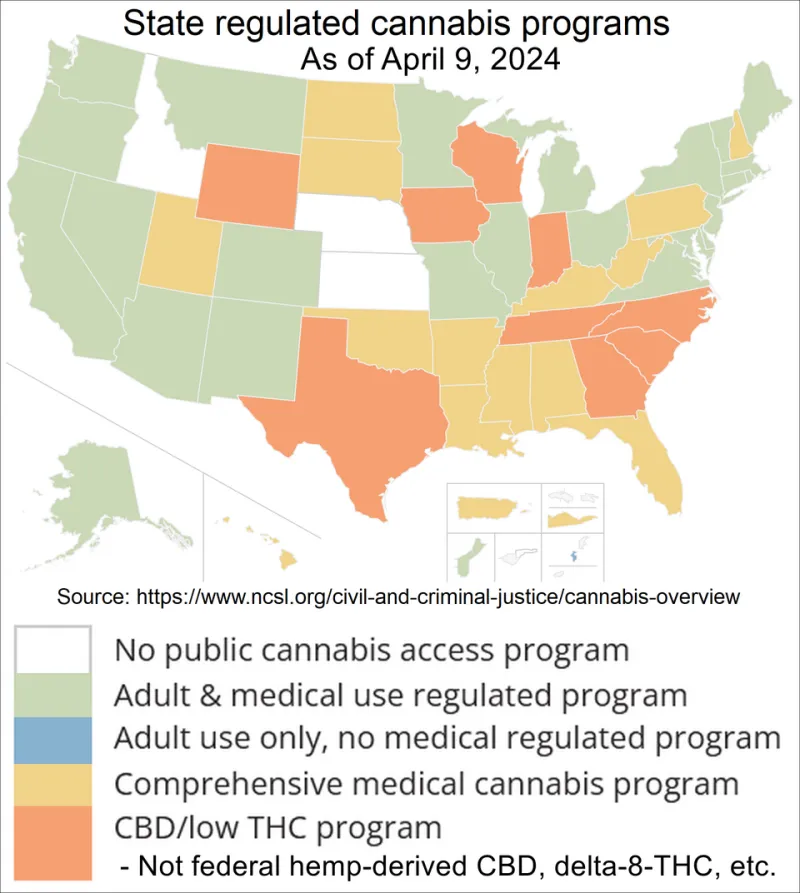
A handful of states have started legislating employment protections for off-duty cannabis consumers. New York, New Jersey, and California have passed laws that restrict employers from discriminating against workers solely based on legal, off-duty cannabis use. Minnesota and Connecticut have similar protections on the books.
But the patchwork is messy and the exemptions are wide. Federal contractors are almost universally carved out. Safety-sensitive positions get broad exemptions. And enforcement mechanisms are often weak — filing a complaint with a state labor board is a long road for someone who just needs a paycheck.
The bigger issue is that even where protections exist, many workers don't know they have them. HR departments certainly aren't advertising it. And plenty of employers in protected states are banking on applicants not knowing their rights.
What You Can Actually Do Right Now
If you're a cannabis consumer navigating the job market, here's what's worth knowing:
Know your state's laws. If you're in New York, California, New Jersey, Minnesota, or Connecticut, you may have legal protection against cannabis discrimination for off-duty use. Look it up specifically for your state — the details vary and the exemptions are real.
Ask about testing policies upfront. It's uncomfortable, but asking during the offer stage — not the application stage — whether the role requires drug testing is completely reasonable. Frame it as wanting to understand the full scope of the role's requirements.
Check your background report before employers do. Under the Fair Credit Reporting Act, you're entitled to a copy of your background check. Services like Checkr and Sterling allow you to see what they have on file. If there are errors — especially around expunged records — dispute them before they cost you a job.
Document everything if you're rejected. If you believe you were discriminated against for legal cannabis use in a protected state, document the timeline, keep your communications, and consider consulting an employment attorney. Cases are being won.
The Bigger Picture
Legalization without employment protection isn't full legalization — it's half a promise. We've made it legal to consume cannabis, but we haven't made it safe to be a cannabis consumer in the workforce. That gap is where people's careers go to die.
The movement has done extraordinary work getting cannabis off the criminal books in state after state. The next frontier is making sure that the same people who fought for legalization, who use cannabis legally and responsibly, can actually build lives and careers without being penalized for it.
Free the weed means free the people who use it — at the dispensary and at the hiring table. We're not there yet. But the pressure is building, and employers who think they can keep hiding behind outdated policies are going to find themselves on the wrong side of this one.