What's Actually in That Bag? The Dirty Secret Behind Strain Names and How to Find the Truth
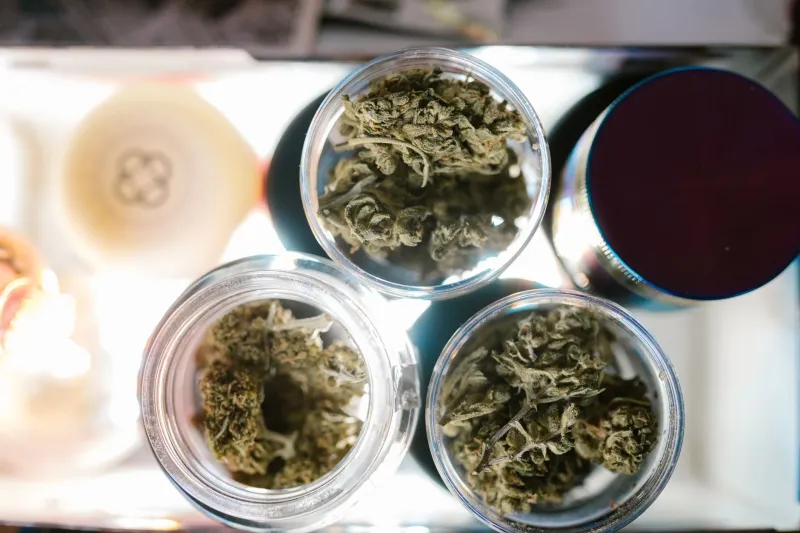
Walk into any dispensary in America right now and you'll find shelves stacked with names that sound like they were dreamed up by a marketing team after a long lunch. "Galactic Runtz." "Frozen Grapes OG." "Sunset Sherbert Zkittlez Supreme." They're evocative, they're memorable, and in a lot of cases, they mean absolutely nothing about what's actually growing in that jar.
Strain naming in the legal cannabis market is, to put it gently, a mess. And consumers are the ones left holding the bag — literally.
The Rebrand Is the Product
Here's a scenario that plays out constantly in the legal weed world: a cultivator grows a batch of flower. It tests decent, maybe great, but the name it was grown under isn't moving units. So the dispensary — or sometimes the grower — slaps on a new label, gives it a flashier identity, and suddenly that same plant is a "premium" product with a premium price tag.
This isn't illegal. There's no federal standard governing cannabis strain names, no trademark system that actually works across state lines (thanks to federal prohibition), and no regulatory body making sure the "Blue Dream" in California is genetically related to the "Blue Dream" in Colorado. It's the Wild West of botany, and the cowboys are winning.
Industry insiders will tell you this has always been a problem, but legalization made it worse. When the market was underground, reputation was everything. A grower who lied about their genetics got cut off. The community policed itself, imperfectly but genuinely. The legal market replaced that social contract with marketing budgets.
Why Tracing Cannabis Lineage Got So Hard
The irony of legalization is that it actually made cannabis less transparent in some ways. Before state-licensed dispensaries, serious collectors and cultivators maintained careful records of where seeds and clones came from. Breeders built reputations over decades. Strains had histories you could actually trace.
The transition to commercial production blew most of that up. Large-scale cultivation operations prioritize yield, consistency, and compliance — not genealogical accuracy. Proprietary genetics get locked down, shared under NDAs, or quietly blended with whatever was available. The result is a market where the same genetic material might be sold under a dozen different names depending on who's moving it and what the trend cycle looks like that month.
There's also the issue of phenotype hunting — the practice of selecting standout individual plants from a larger batch of seeds — which produces legitimate variation but also creates massive confusion when multiple phenotypes of the same cross get named and marketed as entirely separate strains. Is that a problem? Depends on whether someone's charging you $70 an eighth for a "new" strain that's really just pheno #4 of something that's been around for fifteen years.
The Underground Genealogists Trying to Save the Record
While the legal market races ahead without looking back, a loose network of old-school breeders, collectors, and cannabis historians is quietly doing the work of documentation that the industry refuses to do.
These are the people maintaining what you might call living archives — seed banks, grow journals, breeder lineage maps — that track where genetics actually came from. Some of them have been doing this since the '90s. They share information in forums, private groups, and at underground seed swaps that exist completely outside the licensed market ecosystem.
Organizations like the Phylos Bioscience project (before it pivoted away from public-facing genomics work) attempted to build a cannabis genetic database that could give consumers real information about what they were buying. The data they collected before stepping back revealed something striking: many strains marketed as distinct and unique were genetically nearly identical. The diversity consumers thought they were purchasing was largely cosmetic.
Some of these community archivists are now working with academic researchers to formalize the historical record before it disappears entirely. The concern isn't just cultural — it's medical. Patients who rely on specific cannabinoid and terpene profiles for symptom relief need accurate information. A mislabeled strain isn't just a scam; it's a health issue.
So How Do You Actually Verify What You're Buying?
Let's be real: most consumers can't access genetic testing. But there are practical steps you can take to get closer to the truth.
Ask for the Certificate of Analysis — and actually read it. Every licensed dispensary should have COA documents for their products. These lab results show cannabinoid percentages and terpene profiles, which won't tell you the strain's name but will tell you what's actually in the jar. Two products with radically different terpene profiles aren't the same plant, no matter what the label says.
Look up the breeder, not just the strain name. Reputable breeders — Ethos Genetics, Compound Genetics, Archive Seed Bank, and others — maintain public records of their crosses. If a dispensary can't tell you who bred the genetics they're selling, that's worth noting.
Use community resources. Leafly and similar platforms are imperfect but crowdsourced strain databases can give you a baseline. Reddit communities like r/microgrowery and r/cannabis are full of knowledgeable people who will tell you when a strain name is being misused or overextended.
Trust your nose and your experience over the label. This sounds like stoner common sense, but it matters. Terpenes drive a lot of the effect variation people attribute to strain names. If something smells and feels right for your needs, that's real data. The name is just branding.
The Bigger Picture
The strain-naming problem isn't just about consumer protection, though it absolutely is that. It's about what kind of cannabis culture we're building as legalization spreads.
If we let the legal market fully sever the connection between cannabis products and their actual origins — the breeders, the cultivars, the decades of underground development that made these genetics what they are — we lose something that can't be bought back. We end up with a market that looks like the craft beer aisle at a grocery store: a thousand SKUs that all taste roughly the same, with labels designed to trigger a purchase rather than communicate real information.
The people working to preserve cannabis genealogy aren't just nerds with spreadsheets (though some of them absolutely are, and we respect it). They're advocates for a version of this industry that treats consumers as adults who deserve accurate information. That's a fight worth paying attention to.
Free the weed means more than just legalization. It means freeing the information that goes with it.