Open Today, Gone Tomorrow: The Quiet Collapse Happening Inside Legal Cannabis Retail
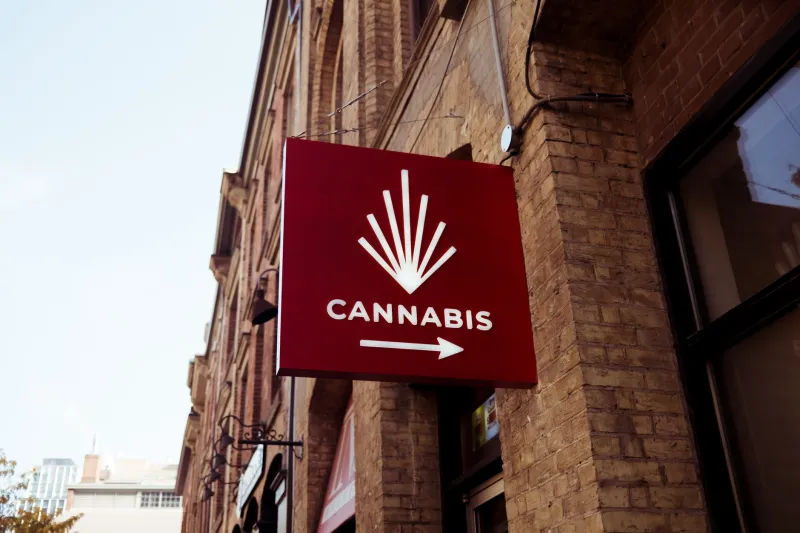
You voted for legalization. You showed up to the rallies, signed the petitions, maybe even donated to the campaign. Then the day finally came — dispensaries opened, the green signs went up, and it felt like a genuine win. So why does it feel like those same shops keep quietly disappearing?
Across the country, legal cannabis retail is caught in a slow-motion crisis that nobody in the industry really wants to advertise. Dispensaries are closing. Not dramatically, not with press releases or community meetings — just a locked door one morning, a vague social media post about "exciting new developments," and then silence. The customers who depended on that shop are left scrambling, and the broader conversation about what legalization actually delivers gets a little more complicated.
The Numbers Nobody Leads With
In states like California, Oregon, and Colorado — the so-called success stories of cannabis legalization — retail closures have become a persistent background noise. Oregon saw such aggressive oversaturation after legalization that the state was producing nearly five times more cannabis than its consumers could buy. Prices cratered. Margins evaporated. Shops that opened with genuine optimism found themselves competing not just with each other, but with a still-thriving illicit market that doesn't pay licensing fees, excise taxes, or commercial rent.
California's situation is arguably worse. The state has one of the most heavily taxed cannabis markets in the world, with a combined state and local tax burden that can push the effective rate above 40 percent on a single transaction. That's before a retailer pays for their annual license, their compliance software, their security requirements, their track-and-trace system, or the electricity bill for those legally mandated cameras that have to run 24/7. The math doesn't work for a lot of operators, and the ones who figured that out early enough got out before the losses buried them.
Why Thin Margins Are Thinner Than You Think
Here's something most cannabis consumers don't fully appreciate: dispensary ownership sounds lucrative from the outside, but the actual profit margins on retail cannabis can be genuinely razor-thin. Unlike most retail businesses, cannabis shops can't deduct standard business expenses on their federal taxes because of IRS Code 280E, which prohibits deductions for businesses trafficking in Schedule I substances. That means a dispensary pays federal income tax on gross profit — not net profit. It's a tax structure that would bankrupt most conventional retailers, and it's doing exactly that to cannabis shops across the country.
Layer on top of that the cost of compliance. Every state has its own regulatory framework, and those frameworks are not cheap to navigate. Inventory tracking, lab testing requirements, employee licensing, security protocols — each of these is a real line item, and none of them scale the way you'd hope for a small independent operator trying to survive in a market that's increasingly dominated by multi-state operators (MSOs) with deep pockets and legal teams on retainer.
Oversaturation Is Real, and It's Getting Worse
When states first legalize, there's often a land-rush mentality. Local governments, eager to capture tax revenue, issue licenses at a pace that outstrips actual consumer demand. The result is a cluster of dispensaries competing for the same customers within a few square miles, each one trying to undercut the others on price while still covering their fixed costs. It's a race to the bottom, and the finish line is a closed storefront.
This isn't hypothetical. In some Denver zip codes, there are more cannabis dispensaries per capita than Starbucks locations. In parts of Los Angeles, you can walk past three or four shops in a single city block. That might sound like consumer paradise, but what it actually produces is a market where no single operator can achieve the volume they need to stay solvent — especially when a significant chunk of consumers are still buying from their old-school plug because it's cheaper and doesn't require showing ID.
What This Means for You as a Consumer
The closure wave matters beyond the economics of individual business owners. When dispensaries close, access shrinks — particularly in communities that finally got a shop after years of being underserved. Patients who rely on cannabis for medical reasons, people without cars who depend on a neighborhood location, and consumers in smaller markets all feel these closures in concrete ways.
There's also the question of what happens to the market when only the biggest players survive. If independent dispensaries keep folding while MSOs consolidate, the legal cannabis market starts to look a lot like every other industry that promised disruption and delivered a new oligopoly. Fewer choices, less competition on price, and a retail experience optimized for profit extraction rather than genuine consumer service.
That's not the version of legalization most advocates were fighting for.
The Fixes That Could Actually Help
None of this is inevitable. There are real policy levers that could stabilize cannabis retail if lawmakers were willing to pull them. Federal descheduling — or even rescheduling — would eliminate the 280E tax trap overnight and give dispensaries the same basic business protections that any other retailer takes for granted. Banking reform would allow cannabis businesses to access credit and capital like normal companies, rather than operating as cash-heavy targets for theft and regulatory scrutiny.
At the state level, smarter licensing caps and more thoughtful market analysis before flooding a region with permits could prevent the oversaturation problem from getting worse. Some states are already experimenting with social equity set-asides and technical assistance programs that help smaller operators compete — but those programs need real funding, not just good intentions on paper.
And consumers have a role here too. Shopping local, choosing independent dispensaries over corporate chains when you have the option, and staying engaged with local cannabis policy isn't just feel-good activism — it's the difference between a community cannabis market and a homogenized retail landscape that serves shareholders first.
Legalization Was Never the Finish Line
The closure of a dispensary doesn't make headlines the way a grand opening does. There's no ribbon-cutting ceremony in reverse, no local news segment about the jobs lost or the patients left without a nearby option. It just happens, quietly, and the legal cannabis landscape gets a little smaller and a little less diverse.
Freeing the weed was always supposed to mean more than putting a product behind a glass counter and slapping a tax on it. It was supposed to mean stable access, community ownership, and a market that actually worked for the people who needed it most. That version of legalization is still worth fighting for — but we have to be honest about how far away from it we still are.