Locked Out of the Legal Market: How Equity Programs Are Leaving Behind the People Who Need Them Most
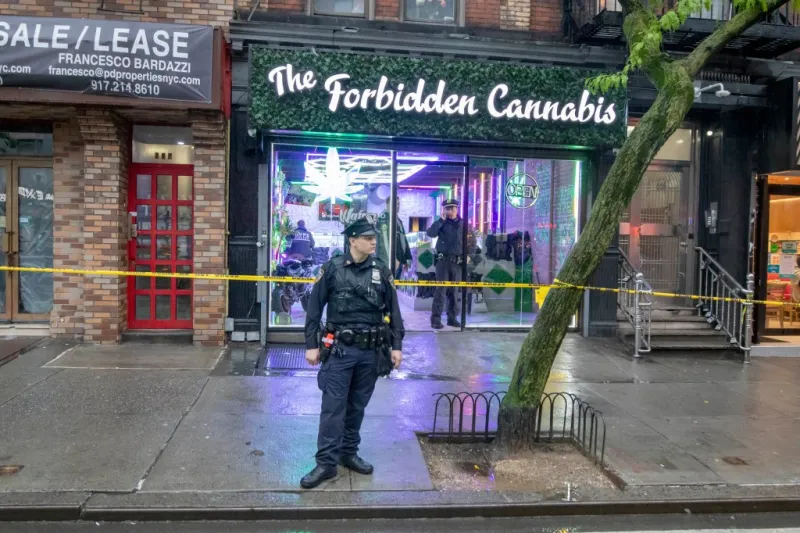
Photo: small cannabis business owner locked door frustrated urban neighborhood, via nypost.com
When California, Illinois, and a handful of other states started rolling out social equity programs alongside cannabis legalization, the pitch was simple and compelling: the people and communities most harmed by prohibition would get a head start in the legal market. Priority licensing. Fee waivers. Technical assistance. A genuine shot at building something after decades of being targeted, arrested, and locked up over a plant.
It sounded like justice. In practice, for a lot of folks, it's been something closer to a cruel joke.
The gap between the promise of cannabis equity and the reality on the ground is wide — and growing. Across the country, social equity programs are struggling to deliver meaningful results for the communities they were designed to serve. And while small operators and people with prior cannabis convictions jump through hoops trying to qualify, venture capital-backed multistate operators are quietly snapping up licenses and shelf space at a pace that would make any monopolist blush.
The Price Tag Nobody Warned You About
Let's start with money, because that's where most equity dreams die.
Even in states with fee waiver programs, getting a cannabis business off the ground requires serious capital. We're talking build-out costs, inventory, security systems, point-of-sale technology, legal fees, and months of operating expenses before a single sale is made. In California, opening a dispensary can easily run $250,000 to $500,000 before you've sold your first eighth. In Illinois, some applicants reported spending six figures just on the application process — lawyers, consultants, compliance documents — before finding out they didn't get a license.
For someone who just finished a prison sentence for a cannabis conviction, or who grew up in a neighborhood that was over-policed during the War on Drugs, that kind of capital is essentially science fiction. You can't bootstrap your way into a highly regulated industry when the regulations themselves are designed around the assumption that you already have money.
And here's the kicker: many equity programs don't actually provide funding. They provide access — to licenses, to expedited review, to reduced fees. But access without capital is just a door with no key.
The Complexity Trap
Regulatory complexity is its own beast. The licensing process in most legal states is genuinely overwhelming, even for people with business experience and legal support. There are state licenses and local permits. Zoning requirements. Background check rules that vary by jurisdiction. Compliance timelines that can stretch years. Mandatory track-and-trace systems. Security requirements. Labor regulations.
For someone without a team of lawyers and consultants — the kind of team that a well-funded multistate operator takes for granted — navigating all of this is a full-time job that doesn't pay. Illinois' social equity program, often cited as one of the more ambitious ones, has been repeatedly criticized for its labyrinthine application process. In 2021, a court challenge froze the entire licensing process for months, leaving equity applicants in limbo while established operators kept doing business.
California's equity programs have faced similar criticism. A 2022 state audit found that the California Department of Cannabis Control had done little to track whether equity applicants were actually succeeding, or even making it through the application process at all.
The Prior Conviction Paradox
Here's one of the most maddening ironies in cannabis equity policy. Many programs specifically target people with prior cannabis convictions as priority applicants. The logic makes sense — these are people directly harmed by prohibition. But in several states, those same convictions can still disqualify applicants from getting licensed.
Federal law still classifies cannabis as a Schedule I substance. Many state licensing frameworks include background check requirements that can flag prior drug convictions — even cannabis convictions — as disqualifying factors. Some states have carved out exceptions for cannabis-specific offenses, but others haven't. The result is a program that says "we want to help people with cannabis convictions" while simultaneously using those convictions to screen people out.
It's the equity trap in its purest form.
Who Actually Gets the Licenses
While equity applicants wait, reapply, and burn through savings on consultants, the big players aren't sitting still. Multistate operators — companies with operations in five, ten, fifteen states — have the legal teams, the capital, and the political connections to move fast. They can absorb licensing delays. They can hire former regulators as compliance officers. They can open in a new market before a first-time equity applicant has finished their paperwork.
In Illinois, nearly two years after adult-use sales began, the majority of operating dispensaries were still owned by the same companies that had been running medical dispensaries before legalization — a group that was overwhelmingly white and well-capitalized. The equity licenses that were supposed to diversify the market were still tied up in court battles and bureaucratic delays.
This isn't an accident. It's what happens when you design a social justice program without actually restructuring the economic conditions that caused the injustice in the first place.
What Equity Could Actually Look Like
None of this means social equity programs are hopeless. It means they need to be redesigned with honesty about what the real barriers are.
Some advocates are pushing for direct grant funding — not loans, not fee waivers, but actual money — for equity applicants. Others are calling for automatic expungement of cannabis convictions as a baseline requirement before any state can even claim to have an equity program. There are calls for stricter limits on corporate consolidation in cannabis markets, and for local community ownership models that don't require individual applicants to have hundreds of thousands of dollars on hand.
A handful of cities and states are experimenting with more creative approaches. Oakland's equity program includes a provision requiring established operators to share space or resources with equity applicants. Some advocates are pushing for cooperative licensing structures that let community members pool resources.
These ideas aren't perfect, but they're honest about the problem. The current approach in most states treats equity like a checkbox — something to point to when critics ask who legalization is really for. Genuine equity means asking harder questions and being willing to actually constrain the corporate interests that have the most to gain from keeping things exactly as they are.
The Stakes Are Real
The communities hit hardest by the War on Drugs — Black and Latino neighborhoods, low-income areas, places where a cannabis arrest could derail an entire life — deserve more than symbolic gestures. They deserve programs that actually work. Programs with funding. Programs that clear the legal barriers they created. Programs that measure outcomes, not just intentions.
Legalizing cannabis without fixing the equity problem doesn't free the weed. It just changes who profits from it.