The Legal Market Ate the Black Market's Lunch — But It's Complicated
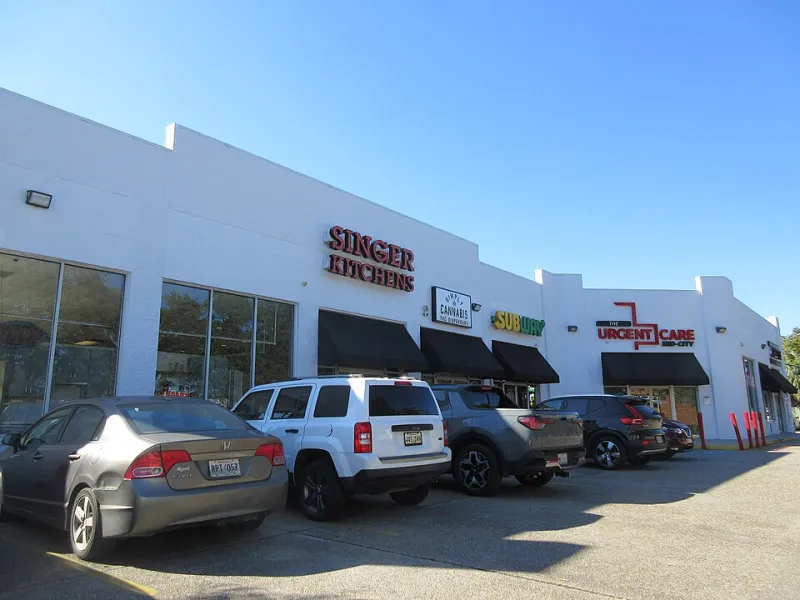
Photo: Infrogmation, CC BY-SA 4.0, via Wikimedia Commons
When cannabis legalization started rolling across the US, one of the big promises was simple: bring the supply chain into the open, regulate it, tax it, and slowly suffocate the underground market. No more sketchy middlemen. No more cash-only transactions in parking lots. No more product with zero quality control.
Several years into this experiment, the results are... mixed. And the story of what's actually happening between legal dispensaries and underground growers is way more nuanced than either side of the debate predicted.
Legal Weed Is Genuinely Disrupting the Underground
Let's start with what's clearly true: in states with mature, well-functioning legal markets, the illicit cannabis economy has taken a serious hit.
Colorado and Washington — the two states that have had the longest-running legal recreational markets — have both seen documented declines in underground cannabis activity over the past decade. The reasons aren't complicated. When someone can walk into a clean, well-lit store and buy lab-tested flower with a credit card, the appeal of tracking down a dealer starts to fade pretty quickly.
Prices have been a huge part of this shift. Legal cannabis in Colorado has gotten remarkably affordable over the years. At various points, the price-per-gram in Colorado dispensaries has dipped below what many black-market dealers were charging — which is genuinely wild when you consider that legal product carries state excise taxes, licensing fees, and compliance costs that underground growers don't have to worry about.
The economics work because of scale. Large commercial cultivation operations can grow cannabis far more efficiently than a small illegal grow. Automation, optimized lighting, commercial-grade HVAC systems, and sheer volume push per-unit costs down dramatically. When a legal cultivator in Colorado is producing thousands of pounds per harvest, they can undercut a small illegal operation even after paying taxes.
But the Underground Isn't Dead — Not Even Close
Here's where it gets complicated.
In states with high tax rates, limited retail access, or slow-moving licensing systems, the illicit market hasn't just survived — it's thriving. California is the most glaring example, and it's become something of a cautionary tale for legalization advocates nationwide.
Despite passing Prop 64 in 2016, California's legal cannabis market has been plagued by problems. Taxes stacked on top of taxes. A licensing process so slow and expensive that many would-be legal operators gave up. Thousands of unlicensed dispensaries operating openly in cities like Los Angeles for years after legalization. And a robust underground supply chain that predates legalization by decades and isn't going anywhere.
The result? Estimates have consistently suggested that California's illegal cannabis market is still larger than its legal one. That's an extraordinary failure for a state that was supposed to be a national model.
The tax burden is a core part of the problem. Between state excise taxes, cultivation taxes, and local taxes, the effective tax rate on legal cannabis in California can approach 30-40% depending on the jurisdiction. That's a huge built-in price disadvantage that illegal operators simply don't carry.
The Legacy Operator Problem
Then there's the most human dimension of this story: the people who were growing cannabis long before it was legal, and who now find themselves in an increasingly difficult position.
Some of these legacy operators — the underground cultivators who supplied medical patients and recreational users for years — have tried to make the transition into the legal market. Many have found it brutally hard. Licensing fees, compliance requirements, mandatory testing, packaging regulations, banking restrictions — the barriers to entry for legal cannabis businesses are substantial, and they fall disproportionately hard on small operators who don't have venture capital backing.
In Northern California's Emerald Triangle — Humboldt, Mendocino, and Trinity counties — small legacy farmers who thought legalization would be their ticket to legitimacy have instead found themselves squeezed out. The legal market rewards scale. A craft cannabis farmer growing a few hundred plants on a family plot can't easily compete with industrial operations producing tons of product per year.
For some, the choice has become grim: keep operating illegally and risk prosecution, or try to go legal and risk bankruptcy. Neither option is good.
What This Means for Prices at the Counter
For the average consumer walking into a dispensary, the underground market's persistence has real effects on what you pay.
In states where legal markets are functioning well and competition is fierce — Colorado, Oregon, Michigan — retail prices have fallen substantially. Oregon in particular has seen cannabis prices drop to some of the lowest in the country, driven by an oversupply of licensed cultivators. That's great for consumers, though it's created its own problems for small farmers trying to stay solvent.
In states where the illegal market remains strong — California, New York (where the legal market rollout has been painfully slow), and others — legal prices stay higher because operators can't fully leverage competitive scale. The underground market sets a price ceiling that legal retailers can't always get under.
There's also a quality conversation happening in parallel. Legal cannabis, with mandatory lab testing for potency, pesticides, and contaminants, offers something the underground market genuinely can't guarantee. As consumers become more educated about what's actually in their product, that quality premium is starting to justify some of the price gap for a growing segment of buyers.
What Needs to Change
If the goal is actually to move cannabis commerce into the legal economy — and to do it in a way that's fair to the communities most impacted by the drug war — a few things need to happen.
Tax policy needs a rethink. States that have priced their legal markets out of competitiveness with the underground are sabotaging their own goals. Lower, smarter tax structures that keep legal prices competitive are essential.
Licensing needs to be faster and more accessible, especially for small and legacy operators. Programs specifically designed to help longtime cultivators transition into the legal market — sometimes called "equity licensing" programs — have shown promise in cities like Oakland and Los Angeles, though implementation has been inconsistent.
And enforcement against large-scale illegal operations needs to be prioritized over small-time legacy farmers who are trying to figure out how to survive in a rapidly changing landscape. The goal of legalization was never to criminalize the people who kept the cannabis economy running during prohibition.
The underground market didn't disappear when we legalized. It adapted. And the legal market is going to have to keep adapting right back — on price, on access, and on fairness — if it wants to win.